
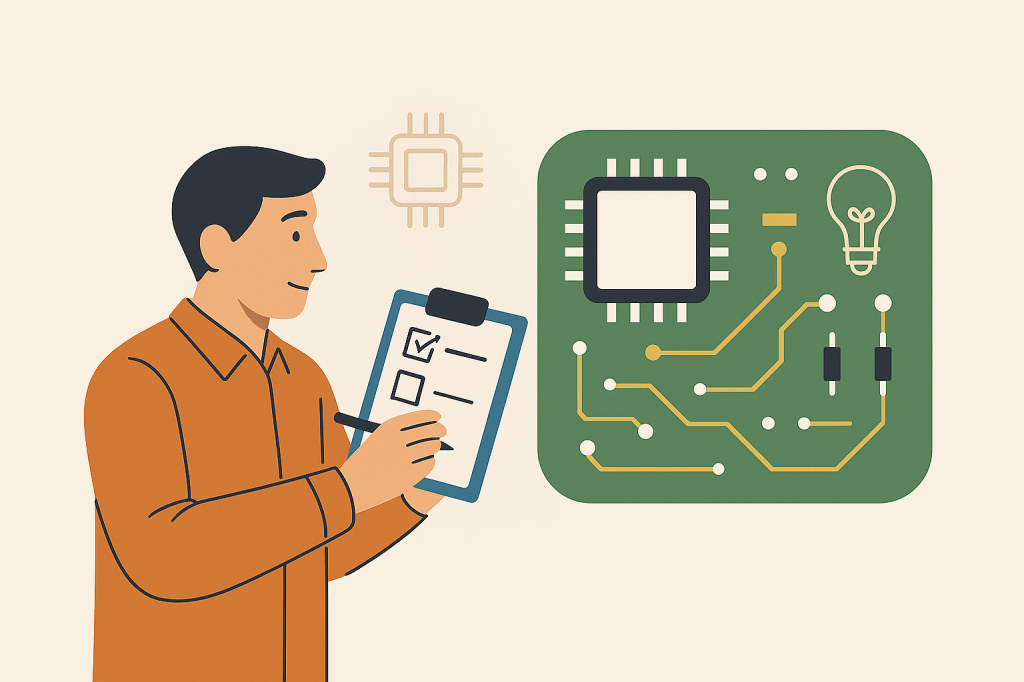
Designing a working product is one thing. Designing a product that works well in the real world—that’s where the true challenge lies. It’s not just about making something that functions in a lab. It’s about making sure it can be built, tested, installed, and used successfully in real-life conditions by real people, without surprises or unnecessary complications.
As engineers, we often focus on whether something can technically work. But just as important are the questions we ask around the edges:
- Will production be straightforward, or will it require endless adjustments?
- Can components be sourced easily and affordably, or will they slow things down?
- Is testing quick and reliable, or does it feel like a puzzle every time?
- Will customers or installers feel confident using it—or frustrated?
Your ability to answer yes to these questions is what sets apart a thoughtful, production-aware design.
Sourcing Components: Keep It Simple and Flexible
Working with your purchasing team early can save you a lot of future headaches. Parts should be easy to find, not dependent on a single supplier. Industry-standard components, ones used in your company’s other products, are usually a safe bet. Where high-precision or unique parts are needed, make sure they’re truly necessary and won’t create bottlenecks.
And always check for red flags—like parts labeled “Not Recommended for New Designs.” That’s a quiet warning from manufacturers that availability could vanish when you least expect it.
Designing for Production: Think Like a Builder
Spend time with your production team. Walk the line. Watch how things are assembled. These insights can shape decisions that make their lives easier—and your design more robust.
Try to:
- Keep component orientations consistent so things are easier to insert and inspect.
- Standardise footprints where possible—no one wants a PCB with 20 resistor shapes.
- Minimise wiring complexity. Clean, modular designs don’t just look good—they build fast and fail less.
- Choose manufacturing processes your factory already supports. If special steps like potting or coating are needed, make sure they’re absolutely justified and that the team is trained and ready.
The goal isn’t perfection—it’s practicality.
Testing: Make It Easy to Check, Easy to Trust
Testing shouldn’t feel like decoding a mystery box. Design with visibility and access in mind. Mark your test points clearly. Use adjustable components that can be tweaked without soldering. If your product needs automated testing, make sure there’s enough space and access for test probes to do their job.
For microcontroller-based products, well-written test software is gold. It builds confidence, saves time, and reduces rework. And remember: involve your test engineers from the start—they often spot issues others miss.
Installation: Think About the End User
When the product finally leaves your hands, someone has to install it. Make sure it’s a smooth experience. That means clear instructions, no surprises during setup, and compatibility with the environments where it will actually be used—temperature, enclosure, power supply, and all.
Also, safety and EMC compliance aren’t just checkboxes. They’re peace of mind for your customers—and a shield for your company.
Final Thoughts
Designing for production is about more than just function—it’s about care. It’s about asking, “How will this feel to the person building it? Testing it? Using it in the field?” When we design with those people in mind, we don’t just create products—we create success stories.
 RNM Innovate
Leave a comment